

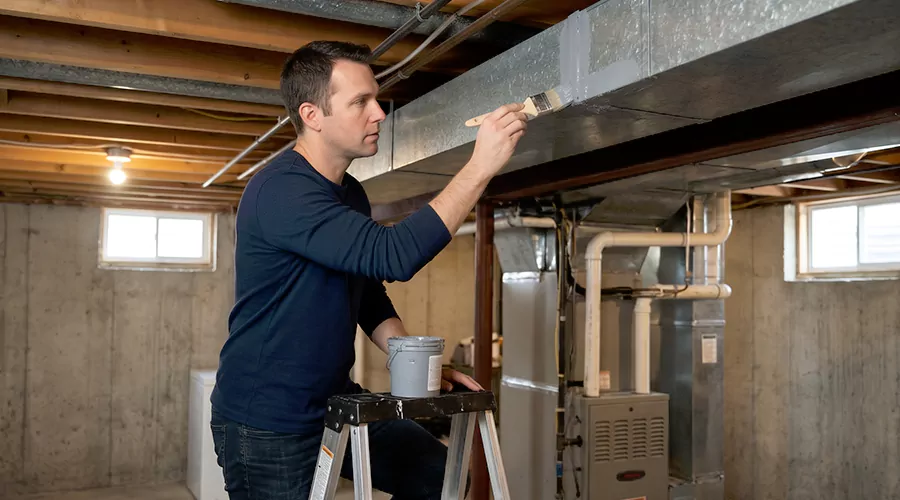
Whole-house duct sealing typically costs $500 to $4,000 for residential HVAC systems, with a national average of approximately $2,250, according to Angi's July 2026 pricing data. HomeGuide reports a broader estimate of $1,000 to $6,000, depending on house size, duct accessibility, and the sealing method. The final price also depends on whether the project includes pressure testing, insulation, or damaged duct repairs. Professional home air duct cleaning can help remove accumulated dust and debris from residential ductwork when an inspection confirms that cleaning is needed.
Air duct sealing is intended to reduce unwanted air leakage from heating and cooling systems. Leaks can occur around duct seams, branch connections, air handler cabinets, and supply or return boots. When conditioned air escapes into an attic or crawlspace, less of it reaches the intended rooms. Return-side leaks can also pull unwanted air from surrounding building cavities.
Whole-house sealing addresses the connected duct network rather than one isolated joint. Understanding the costs helps homeowners compare different proposals and decide which repairs offer reasonable value.
What Is the Average Whole-House Duct Sealing Cost in 2026?
Costs vary substantially across contractors and sealing methods.
| Duct Sealing Service | Estimated U.S. Cost |
|---|---|
| Typical professional sealing, Angi | 500–4,000 |
| Average professional sealing, Angi | $2,250 |
| Whole-house sealing, HomeGuide | 1,000–6,000 |
| Manual sealing, HomeGuide repair guide | 400–1,900 |
| Aerosol sealing, HomeGuide repair guide | 1,300–2,700 |
| Duct leakage pressure testing | 200–450 |
| Minor ductwork repairs | 200–700 |
These are published planning estimates, not guaranteed contractor prices. Different publications use different project definitions and samples.
A whole-house job involving extensive concealed leakage may cost considerably more than sealing several accessible joints.
How Much Does Duct Sealing Cost by House Size?
Angi provides the following broad estimates based on residential floor area.
| Home Size | Estimated Duct Sealing Cost |
|---|---|
| 1,000 square feet | 500–1,500 |
| 1,500 square feet | 750–2,250 |
| 2,000 square feet | 1,000–3,000 |
| 2,500 square feet | 1,250–3,750 |
| 3,000 square feet | 1,500–4,500 |
Home size is only a rough pricing guide.
The number of HVAC systems, duct length, existing damage, and accessibility may matter more than square footage alone. For example, a house with two separate duct systems and difficult attic access may cost more than a larger home with one accessible network.
What Factors Affect Whole-House Duct Sealing Costs?
1. Number of HVAC Systems
Each furnace or air handler may have a separate supply and return network. Testing and sealing multiple systems typically require additional labor and equipment setup. Confirm whether the quoted price includes every HVAC system.
2. Duct Accessibility
Exposed metal ducts in an unfinished basement are generally easier to reach than ducts concealed inside walls and ceilings. Difficult access may increase labor requirements or make aerosol sealing more attractive. A contractor should inspect the layout before recommending the method.
3. Extent of Leakage
Numerous small leaks may require a different approach from a few large disconnected joints. Large openings should be repaired mechanically before sealing. The contractor should distinguish between ordinary connection sealing and significant duct reconstruction.
4. Duct Condition
Crushed flexible ducts, disconnected branches, and damaged insulation require more than sealant. These problems may need replacement components and additional labor. Sealing alone cannot restore the intended shape of a severely compressed duct.
5. Sealing Method
Manual sealing and aerosol sealing involve different materials, equipment, and access requirements. The best value depends on the actual location and size of the leaks.
Manual Duct Sealing vs. Aerosol Sealing Cost
Manual duct sealing typically involves applying HVAC mastic or approved metal tape to accessible joints. Aerosol sealing uses specialized equipment to carry adhesive particles toward small leaks inside the ducts.
| Feature | Manual Sealing | Aerosol Sealing |
|---|---|---|
| Application | Accessible exterior duct joints | Internal duct leakage openings |
| Equipment | Hand tools and sealing materials | Specialized pressure and aerosol equipment |
| Best for | Accessible connections and repaired joints | Numerous small concealed leaks |
| Large disconnected ducts | Mechanical repair possible | Separate repairs required |
| Common pricing approach | Labor and repair scope | System-based project quote |
| Verification | May involve separate pressure testing | Usually includes before-and-after measurements |
Published prices overlap, so one method is not always cheaper.
A contractor should explain why the recommended approach fits the duct system and identify any repairs needed before sealing.
How Much Does Aerosol Duct Sealing Cost?
PickHVAC's October 2026 estimates place Aeroseal service for one residential system at approximately $1,500 to $3,500. HomeGuide publishes a broader Aeroseal estimate reaching approximately $6,900 for some projects.
Aerosol treatment can be useful when leakage is distributed throughout concealed passages. However, the service still requires preparation and may involve manual repairs. Professional apartment air duct cleaning can help remove accumulated dust and debris from apartment ventilation systems when an inspection shows that cleaning is needed.
Ask whether the quoted price includes initial leakage testing, final verification, and a written report.
Does Duct Leakage Testing Cost Extra?
Sometimes. A contractor may include baseline testing and a final measurement in the sealing package. Other companies charge separately. Angi estimates professional duct pressure testing at approximately $200 to $450.
Testing can show how much air leakage was present before repairs and how much remained afterward. The measurement commonly uses CFM25, which describes leakage airflow at a pressure difference of 25 pascals. Request the results in writing whenever possible.
Does Whole-House Duct Sealing Include Insulation?
Not automatically. Duct sealing reduces unwanted air leakage. Duct insulation limits heat transfer through the duct walls. Both improvements may be appropriate when ductwork passes through an unconditioned attic, crawlspace, or garage.
ENERGY STAR recommends sealing accessible ducts and insulating those located outside conditioned spaces. Ask whether insulation repairs are included in the estimate or priced separately.
Can You Seal Air Ducts Yourself?
Some accessible duct leaks can be repaired by a homeowner with appropriate skills. ENERGY STAR recommends suitable HVAC mastic or approved metal tape rather than ordinary cloth-backed duct tape. However, large disconnections, concealed leakage, and work involving furnace cabinets or combustion appliances warrant professional assistance.
Improper sealing or return-air changes can affect pressure relationships and combustion safety. A qualified contractor should perform appropriate safety and airflow checks after significant duct modifications.
Is Whole-House Duct Sealing Worth the Cost?
The value depends on the amount and location of leakage. ENERGY STAR estimates that typical duct systems can lose approximately 20% to 30% of moving air through leaks and poor connections. Reducing leakage outside conditioned space may improve delivered airflow and lower avoidable heating or cooling losses.
However, not all homes have the same leakage level, and savings are not guaranteed. Pressure testing helps determine whether the duct network has a problem substantial enough to justify a major sealing project.
How Much Can Duct Sealing Save on Energy Bills?
Energy savings depend on climate, HVAC usage, equipment efficiency, leak locations, and the severity of the original problem. A home with significant supply leakage into an attic may benefit more than a home with small leaks entirely within conditioned space.
Avoid contractors promising a fixed percentage reduction in utility bills without evaluating the property. A home energy assessment can help estimate the likely benefit.
How to Avoid Overpaying for Duct Sealing
Request at least three written estimates when possible. Compare the included systems, testing, repair methods, and insulation work. Ask contractors to identify major defects and explain whether the job involves manual sealing, aerosol treatment, or both.
Local utility programs may offer rebates for verified duct improvements. Check current eligibility requirements before scheduling work. A low estimate that excludes necessary repairs may not provide better value than a more complete proposal.
When Should You Seal Your Air Ducts?
Consider inspection and testing when rooms remain uncomfortable, heating or cooling bills increase unexpectedly, or visible duct connections are damaged. Sealing may also be appropriate after major HVAC installation work or renovations.
The U.S. Department of Energy recommends addressing leakage before insulating existing ducts. If ducts are otherwise sound and testing shows little leakage, extensive sealing may not be necessary.
Conclusion
Whole-house duct sealing commonly costs several hundred to several thousand dollars, with Angi reporting an average of approximately $2,250 in 2026. Manual sealing, aerosol treatment, accessibility, and duct condition influence the final price. Pressure testing and insulation may involve additional charges. The best approach is to verify leakage, repair significant defects, and compare detailed estimates before committing to a whole-house service.